

Stolen Cryptocurrency Recovery: How DriveSavers Rebuilt a Trezor Seed Phrase from 10 Missing Words
from 10 Missing Words
Device:
Trezor hardware wallet
Challenge:
Reconstruct 10 missing recovery seed phrase words
Recovery Process:
Forensic video analysis and proprietary cryptocurrency recovery software
Final Recovery Effort:
5 hours at 28 billion guesses per second
Result:
All cryptocurrency assets were recovered before the thieves could access the wallet
DriveSavers crypto recovery services combined forensic video analysis with proprietary recovery software to solve a brute-force problem initially estimated to be computationally infeasible.
Background
Thieves stole a safe containing both a Trezor hardware wallet and a paper sheet listing its 20-word recovery seed phrase. The client had a copy of the first 10 words. The other 10 had to be reconstructed quickly. Without the full phrase, the client had no way to restore the wallet on replacement hardware and secure the funds before the thieves could drain it.
A Trezor hardware wallet is protected by a PIN on the device itself, but the 20-word recovery seed phrase is the master backup. Anyone with the full phrase can restore the wallet on new hardware and move the funds. Reconstructing the phrase was the client’s only option. For the thieves, the paper backup was the easiest path to the digital asset, the money.
Why Standard Recovery Wasn't Possible
This Trezor’s Seed phrase was derived from the SLIP-0039 Shamir backup word list, which contains 1,024 possible words. With 10 known positions missing, the number of possible combinations was astronomically large, making direct brute force impractical.
On standard hardware, brute forcing the missing 10 words would take roughly 803 trillion years. Even at a trillion guesses per second, the search would run for about 40 billion years. A raw search wasn’t a viable path. The search space had to be narrowed substantially before high-speed computation could bridge the gap.
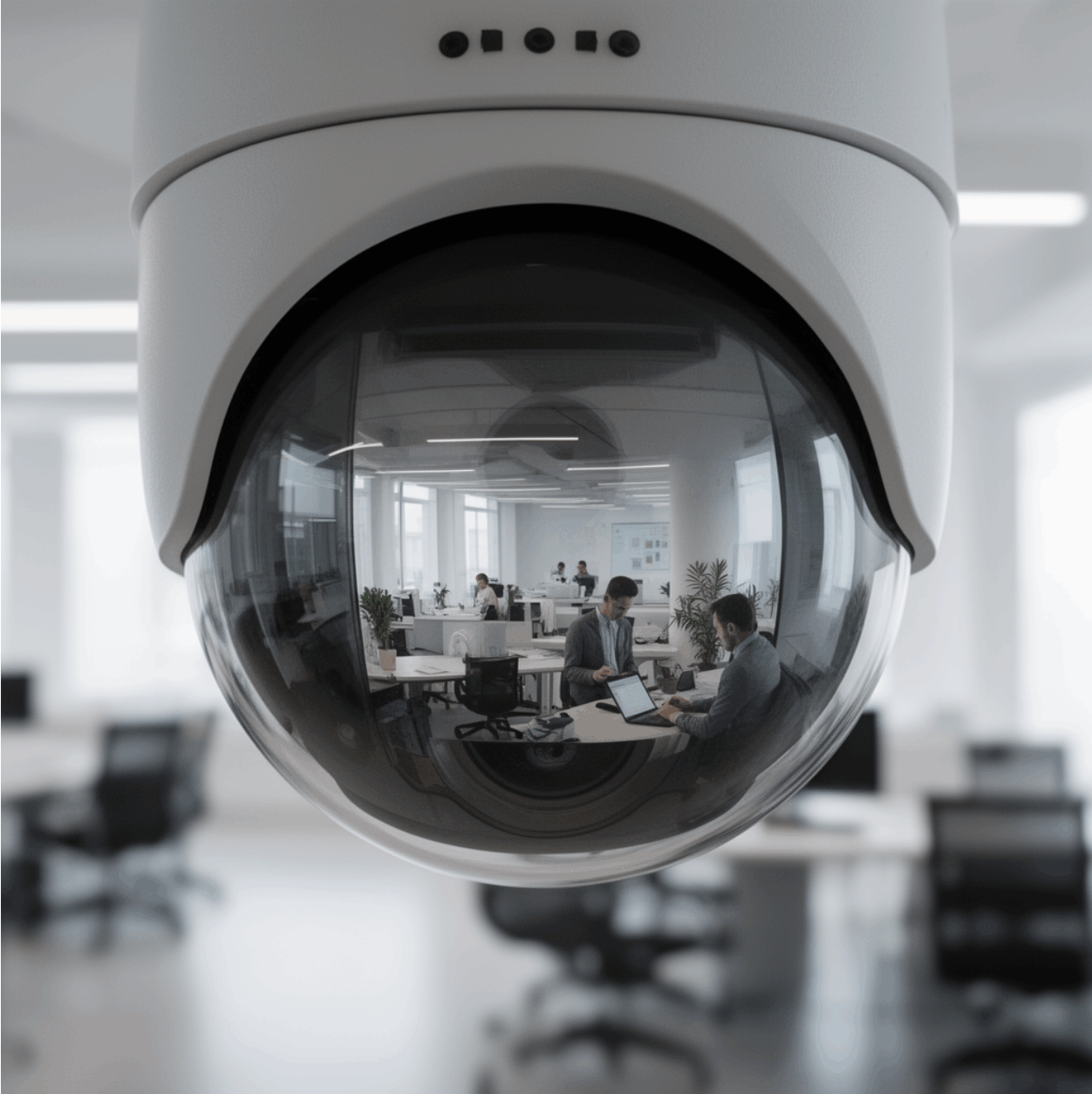
Working from Security Camera Footage
The office security cameras recorded the client writing the seed phrase. This footage was the only remaining record of the missing words.
An outside video forensics team had already examined the footage and determined the resolution was too low to identify any of the missing words. Nothing in the video showed pen on paper clearly enough to read the text.
DriveSavers engineers reviewed the footage again, confirmed the same reading limits, and looked for what else it could show. Many of the words had been written with the client’s hand almost entirely off camera. For the words that were on camera, visibility varied. The tip of the client’s hand was visible for a few words. Part of the thumb was visible for a few others.
What the footage clearly showed was a portion of the printed Trezor recovery card itself, which provided a consistent character grid for each word position; however, some marks that appeared to be characters were found to be nothing more than ink smudges.
Narrowing the Search
The printed Trezor recovery card itself gave a reliable anchor, reducing the candidate pool for each word position from 1,024 possibilities to approximately 200 based on character length.
To interpret the limited hand motion visible in the video, the team asked the client for separate handwriting samples. The client’s way of forming letters proved distinctive. Certain letters were written top to bottom, others bottom to top. One had a preliminary loop that wasn’t part of the letter itself. Another had a shape closer to a lightning bolt than a typical curve.
For positions where partial hand motion was visible, engineers used these patterns to eliminate incompatible candidates from the SLIP-0039 word list. Identifying Word 11, combined with accelerated hardware, reduced the remaining brute-force estimate from 803 trillion years to 33 years. Word 13 reduced it further to 59 days. By Word 15, the remaining combinations were within computational reach.
Word 16
Word 16 introduced a critical ambiguity. The Trezor recovery card showed 8 character boxes for that position, but the video suggested the client had written only 6. Because SLIP-0039 words are fixed, using the wrong character length would eliminate the correct answer entirely. The team worked through the evidence and concluded the real word was most likely 6 characters. Two of the marks on the backup paper had likely smudged into each other, creating the appearance of additional characters.
Rather than relying on a single uncertain assumption, the team locked in only high-confidence constraints and allowed the recovery software to evaluate the remaining valid candidates.
Completing the Recovery
At this stage, the remaining uncertainty was small enough to make computation viable. With the high-confidence words locked in and the remaining pool narrowed, DriveSavers proprietary cryptocurrency recovery software executed the final brute-force effort at 28 billion guesses per second. The correct seed phrase was identified in 5 hours, enabling successful wallet recovery.
From there, the wallet was restored and the cryptocurrency was transferred to a secure wallet before the thieves could act.
“Brute-forcing the 10 missing words would have taken over 800 trillion years on standard hardware, so we had to find another way. The video was too blurry to read the words, but we could see the client’s hand move. Once we matched those movements against the word list Trezor uses, the final verification ran at 28 billion guesses per second and identified the correct phrase in five hours, after weeks of forensic analysis and search-space narrowing.”

Mike Cobb
Director of Engineering, DriveSavers Data Recovery
Other Recovery Scenarios
Most cryptocurrency losses stem from a handful of scenarios: a stolen wallet, a partial seed phrase, a forgotten password, a corrupted wallet file, or a physically damaged storage device. Some of these scenarios are recoverable. Others are not. Each depends on the specific failure conditions.
DriveSavers crypto recovery experts handle partial and damaged seed phrases, lost crypto wallet passwords, corrupted wallet.dat files, hardware wallet PIN recovery, and physical damage to storage media containing wallet data. The approach shown in this case combined forensic video analysis and proprietary recovery software. That combination fits a specific and uncommon set of circumstances for crypto asset recovery.
To recover cryptocurrency, or to discuss a partial seed phrase, contact DriveSavers Crypto Recovery Services at 1 (800) 440-1904.

 English (United States)
  English (Australia)
  French (France)
  English (UK)
  French (Canada)
  English (Canada)
  Spanish (Mexico)
  German
  Dutch
Dutch  Italian
  Finnish
  Polish
  Norwegian
  Swedish
  Danish
  Spanish (Spain)
  Chinese
  Japanese
  German (Austria)