

Ransomware Data Recovery in Australia


Ransomware Recovery, Handled by Specialists
Our team relies on tools and techniques made for data that ransomware has compromised. Before or after any contact with the threat actor, the recovery work we can carry out on affected systems includes:
Under Attack?
Take These Steps Immediately
Note: Keep in mind that disconnecting and shutting down are two different things.
Where devices cannot be disconnected from the network, shutting them down may be the safest way to stop the infection moving further. The catch is that powering down an affected device can destroy evidence held in volatile memory, so treat it as a last resort.
Bringing in DriveSavers as soon as ransomware hits can reduce the damage to your data and systems and improve the likelihood of recovering your valuable information.

No matter the scale or severity of the ransomware attack, our data recovery solutions are optimised to help you recover your data as quickly and efficiently as possible.
It is critical to contact DriveSavers as soon as possible for optimal data recovery success, whether or not you’ve already contacted the attacker. We provide a free consultation to help you understand appropriate courses of action and review alternative, less expensive, and more time-effective solutions. It should be noted that paying the ransom does not ensure that the victim will receive the decryption key or regain access to their files.Mike Cobb — Director of Engineering
Data Recovery Built for the Cyber Security Industry
DriveSavers focuses on advanced data recovery for the cyber security industry. With in-depth industry experience and state-of-the-art techniques, we efficiently retrieve critical data after ransomware attacks to keep your business running and your operations secure.
Digital Forensics
Forensic firms choose to work with DriveSavers because their tools and processes are familiar to us. We can join forensic teams as images are being captured, which helps move the recovery along faster.
Incident Response
IR firms value our close understanding of TA comms, negotiation and the full IR process. That lets us coordinate with IR partners and weigh recovery efforts against their timelines.
Data Privacy Law Firms
Breach coaches in need of a prompt assessment of how complex the data loss is, the risks involved and whether recovery is feasible have found DriveSavers to be a qualified vendor. We understand that work needs to happen under privilege, and we keep counsel updated on recovery progress.
Restoration Services
Restoration teams get fast, clear options from DriveSavers for getting at critical business information. We can also recover data that has been corrupted by decryptors that fail, or locked away by encryption.
Insurers
DriveSavers is aware of the business interruption costs involved and how urgent it is to return insured businesses to their pre-breach, operational state. We add value by responding fast and delivering a rapid recovery evaluation that measures how viable recovery is, and that could also be an alternative to paying the ransom.
Data Security
During Data Recovery
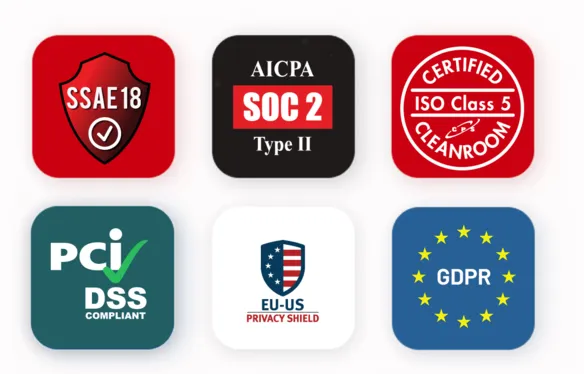
Anyone can say they're secure. DriveSavers can show it: SSAE 18, SOC 2, ISO Class 5 Cleanroom and PCI DSS, with your data handled under Australian privacy requirements. See the proof.
Why Choose DriveSavers for Ransomware Data Recovery?
Since 1985, DriveSavers has delivered data recovery services with a proven record of success. We apply proprietary, cutting-edge techniques and rely on seasoned engineers to find alternative recovery paths, which may mean a decryptor is not needed. Round-the-clock security monitoring at our secure facility keeps your data safe at all times.
About the SOC 2 Type II Audit
DriveSavers is audited every year against SOC 2 Type II, covering the controls over our internal data hosting and processing. The audit gives assurance that our data recovery services maintain the strict data security and privacy protocols demanded by the corporate clients and government agencies we work with.
Our annual SOC 2 Type II audits are conducted by independent control professionals from IS Partners, LLC, a CPA firm specializing in information security and compliance. Audits are performed continuously on a twelve-month “look back” cycle to ensure our security controls strictly operate as intended year-round. Our full SOC 2 Type II report is available upon request.
Real Result: DriveSavers Case Study
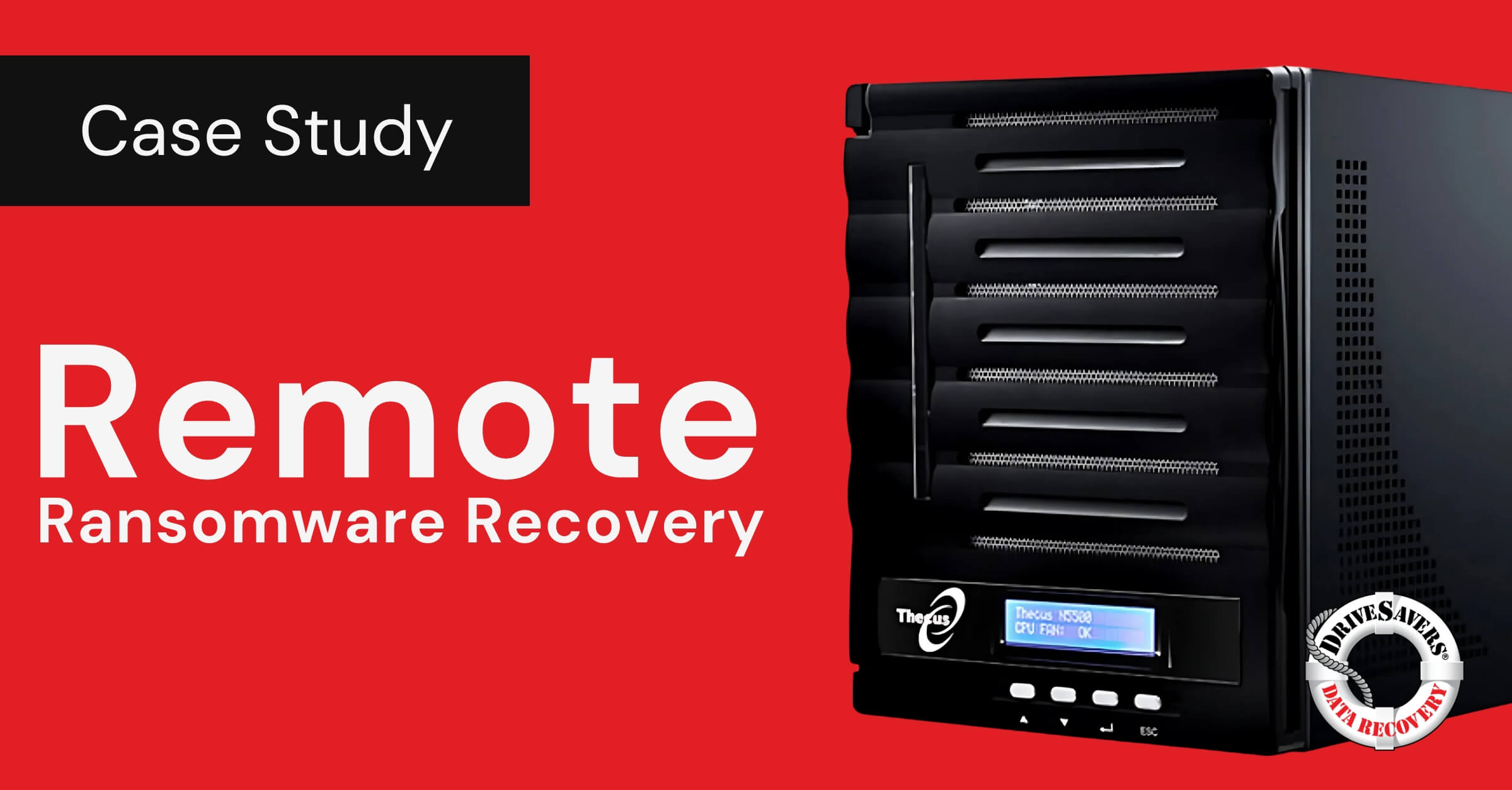
Law firm data back: SQL Server, backups and virtual machines recovered following a ransomware attack.
Using secure remote methods and innovative custom-built tools, our recovery specialists restored all of the critical SQL Server databases, Veeam backups and virtual machine data.
Attackers behind ransomware tend to target high-value or sensitive data held by individuals, businesses or organisations, since these victims may be more inclined to pay up to avoid losing data, suffering financial damage or harming their reputation.
Talk to DriveSavers about our ransomware data recovery solutions before you contact the attacker. Our approach may recover more data than you would get by paying the threat actor.


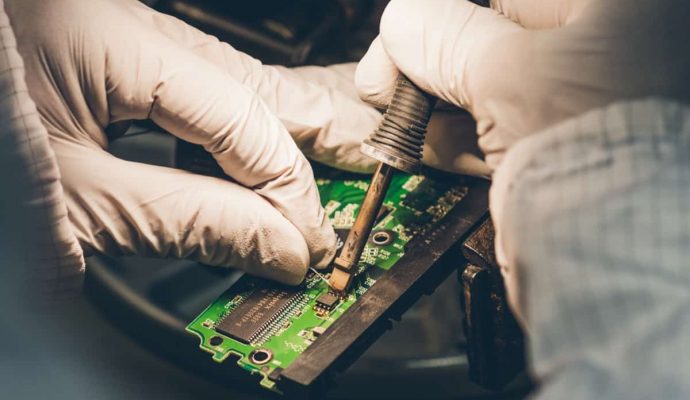

Ransomware: An Introduction
Ransomware has become one of the most serious cyber security threats of recent years, and it affects individuals, businesses and organisations alike.
Ransomware is a form of malware that infiltrates a computer or network, encrypts the victim’s data and then asks for payment in return for the decryption key. Money is the motive: the attackers are trying to extort their victims. Each strain has its own encryption methods and tactics, yet all share one goal, which is to keep the data hostage until the ransom is paid. Other risks exist too. Some attackers threaten to make private information public so the victim feels even more pressure to pay. It is important to know that these attacks are not always about taking data and destroying it. Usually, the data is held hostage, or its exposure is threatened, until the ransom is paid.
Ransomware is a significant cyber security threat that can bring down businesses, governments and individuals. It targets flaws in a computer system or network, commonly using phishing emails, malicious downloads or compromised websites. After getting in, it spreads quickly, locking or encrypting files and asking for payment to unlock them. The impact on an organisation can be devastating, including data loss, financial pressure, reputational harm and possible legal repercussions.
Understanding Ransomware
Defending against ransomware, and responding when it strikes, starts with understanding how it exploits vulnerabilities and what it is after.
Ransomware usually makes its way into a computer or network through phishing emails, malicious attachments, compromised websites or software vulnerabilities. With access gained, it encrypts the victim’s files or locks their system so the data cannot be reached. Lacking the decryption key, the encryption is strong and often cannot be broken.
Once encryption is complete, the ransomware shows a ransom note explaining how to pay, typically in cryptocurrency, and when. If the deadline is missed, the attackers may threaten to delete the encrypted files, put the ransom up or leak sensitive information.
The purpose of ransomware is to extort money from victims by encrypting, and potentially exfiltrating, their data. It does this by:
- Gaining access to a computer or network through various attack vectors.
- Encrypting files or locking systems with advanced encryption algorithms.
- Demanding that the victim pay a ransom for the decryption key.
- Applying pressure through deadlines and threats to delete or expose data.
- Exfiltrating sensitive information in some cases to use as leverage.
Recognising a Ransomware Attack
Catching ransomware early in the infection process is critical to keeping the impact on your data and systems as small as possible.
Becoming familiar with the usual signs of an attack lets you act swiftly, reduce the damage and improve the chances of recovering your files.
Ransomware can appear in many ways, but these are the typical signs of an infection:
- Files that suddenly won’t open: Your files may become inaccessible, with icons replaced by unknown file types or blank placeholders. Ransomware encrypting the files is a common reason.
- Ransom note: During an attack, a ransom note commonly appears on the victim’s screen or in the affected folders. It generally gives details of the attack, payment instructions and a deadline.
- Changed file extensions: Ransomware frequently alters file extensions, so the operating system can no longer identify the encrypted files. New extensions might be random or specific to a ransomware strain (e.g. .locky, .wannacry, .crypt).
- Unusual system behaviour: A computer or network that runs slower than normal, programs that crash or more hard drive activity than usual can indicate that ransomware is encrypting files or spreading across the network in the background.
- Suspicious emails or attachments: Phishing emails with malicious attachments or links are a frequent way for ransomware to get in. Be careful with unexpected emails, particularly those with odd attachments or links to websites you don’t recognise.
Ransomware Attack Methods
Protecting your systems against ransomware means being proactive.
Good security practices, including keeping software and operating systems updated, using strong passwords and backing up your data regularly, help lower the chance of a ransomware attack.
Teaching employees about the dangers of phishing emails and suspicious attachments can also help prevent ransomware infections.
A ransomware attack can begin in a number of ways, such as:
- Phishing emails: Attackers frequently rely on phishing emails to trick recipients into clicking malicious links or opening infected attachments. The messages can look like they are from a trusted source, or contain urgent wording meant to push the recipient to act.
- Exploit kits: These are tools cybercriminals use to exploit known vulnerabilities in software or operating systems. Attackers can use them to deliver ransomware to a target system with no action from the user.
- Remote Desktop Protocol (RDP) attacks: RDP is a popular protocol for accessing and managing computer systems remotely. By exploiting weak RDP credentials or vulnerabilities, attackers can get into a system and deploy ransomware.
- Malvertising: This is the practice of slipping malicious code into legitimate online advertising networks. Just visiting a website that displays the malicious ad can infect a user with ransomware, even without a click.
Consequences of ransomware attacks
Knowing how ransomware attacks work, and what they can lead to, supports effective strategies for preventing, detecting and responding to these threats, and so limits the impact on your data and systems.
The consequences of ransomware for individuals and businesses can be serious, including:
- Data loss: Plenty of victims cannot recover their encrypted data, either because there are no backups or because the ransomware has compromised the backup systems as well.
- Financial impact: A ransomware attack can be very expensive, with costs such as the ransom payment (if paid), data recovery and lost revenue from downtime or reputational harm. Paying the ransom does not guarantee the victim will get the decryption key or regain access to their files.
- Disrupted daily operations: Attacks can seriously interrupt day-to-day operations, as organisations may have to halt work while they try to recover data or restore systems.
- Reputation: An organisation’s reputation can suffer, with customers, partners and the public losing trust.
- Legal and regulatory consequences: Organisations that don’t protect sensitive data or don’t comply with data protection laws and regulations may face legal or regulatory penalties.
Responding to a Ransomware Infection with DriveSavers
If you are facing a ransomware infection, it is critical to act fast and take the right precautions so you can limit the damage and give yourself the best chance of recovering your data.
If ransomware gets into your systems, following these steps and working with DriveSavers can reduce the damage to your data and systems, raise your chances of recovery and lessen the likelihood of future attacks.
This is what to do if you are infected with ransomware, and how DriveSavers can assist:
- Disconnect: Immediately disconnect the affected device(s) from the network so the ransomware can’t spread to other devices or systems. This covers Wi-Fi as well as any connected external devices or cloud storage services.
- Isolate the affected device(s): Turn off shared network resources and disable remote access to the infected devices. Doing so can help contain the ransomware and reduce further damage.
- Preserve evidence: Hold on to a copy of the ransom note, any suspicious emails or attachments and other artefacts connected to the attack. Cyber security professionals or law enforcement may use them in their investigation and recovery efforts.
- Consult DriveSavers: Contact DriveSavers for professional help. Our experts can review your options, take you through the recovery process and help you work out whether your data can be returned.
- Activate your incident response plan: If your company has an incident response plan, use it to coordinate your response to the attack.
- Notify the relevant parties: Report the infection to your IT department, security team or managed service provider. Depending on where you operate and what data was compromised, you may also need to report it to law enforcement or a regulator.
- Determine the extent of the infection: Identify which files, devices or systems are affected and which ransomware strain is involved. This will help you decide on the best recovery path.
- Consult DriveSavers: Contact DriveSavers for professional help. Our experts can review your options, take you through the recovery process and help you work out whether your data can be decrypted.
- Communicate with stakeholders: Keep staff, customers and partners informed about the situation and be transparent about the steps you are taking, including working with DriveSavers to recover your data.
Paying the ransom is not the only option, and it may not be the best one, for these reasons:
- for the following reasons:
- Only about 4% of the time does paying the ransom result in the full recovery of all data.
- Paying signals to the threat actor how valuable your data is, and may invite double or even triple extortion.
- Paying a ransom funds criminal activity and, in some cases, is illegal in itself and can result in prosecution.
- Working with a professional data recovery company can be a more thorough, faster and cheaper way to reclaim your data, without funding crime.
DriveSavers uses tools we have built specifically to recover data that a ransomware attack has compromised.
Our data recovery solutions for ransomware-affected systems include:
- Adapting our tools to suit each data loss scenario
- Fixing corrupt files once they have been decrypted
- Recovering older or other versions of the data that remain unaffected, including from copy-on-write systems
- Searching for and recovering data from alternative sources, including tape and cloud assets
If ransomware gets into your systems, following these steps and working with DriveSavers can reduce the damage to your data and systems, raise your chances of recovery and lessen the likelihood of future attacks.



Companies Worldwide Count on DriveSavers
DriveSavers supports over 20,000 data recovery business partners worldwide. Your business could be one of them! Some of our satisfied customers include companies such as Coca Cola, Facebook, Google, AT&T, Sony, NASA, and many others.


 English (United States)
 English (Australia)
 French (France)
 English (UK)
 French (Canada)
 English (Canada)
 Spanish (Mexico)
 German
 Dutch
 Italian
 Finnish
 Polish
 Norwegian
 Swedish
 Danish
 Spanish (Spain)
 Chinese
 Japanese
 German (Austria)