
The Asset Isn’t the Tape: Protecting Historical Enterprise Knowledge
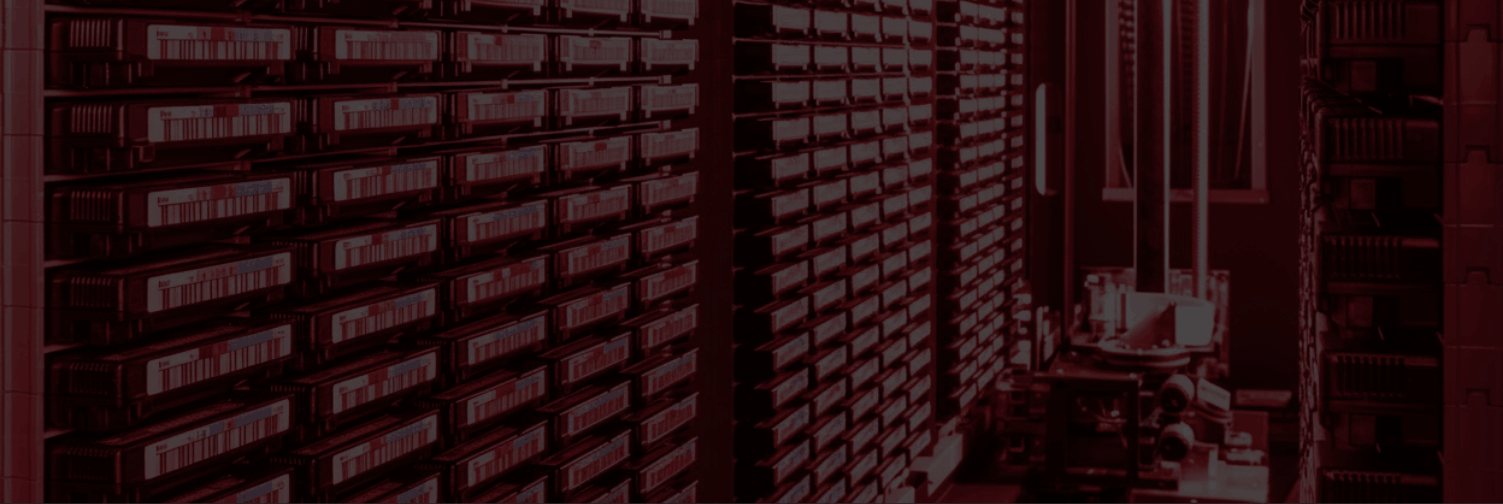
Enterprise archive projects often begin with a technical trigger.
A data center is being consolidated. An acquisition has introduced new data and backup formats. A backup application is being retired. Often, simple economics drive the effort—the newer, denser archive systems can offer significant savings and improved security.
All are legitimate reasons to migrate to newer, safer infrastructure. But they can obscure a more important question:
What exactly are we protecting?
The answer is: it’s not the tapes or the data.
It’s what they represent: decades of proprietary business knowledge contained within them.
Historical Enterprise Knowledge
Decades of customer interactions, engineering records, transaction histories, research data, service resolutions, operational decisions, and years of institutional experience can represent an irreplaceable corporate asset. Much of this information exists nowhere else in the same combination, history, and business context—and competitors cannot simply purchase that institutional knowledge.
It’s yours alone, and that can represent a rare competitive advantage.
That makes archive modernization more than a security enhancement or cost-reduction exercise. It is an opportunity to preserve and leverage access to a uniquely valuable data pool before the technologies required to retrieve it disappear.
The asset isn’t the tapes.
It’s the decades of proprietary enterprise knowledge contained within them.
The Access Window Is Changing
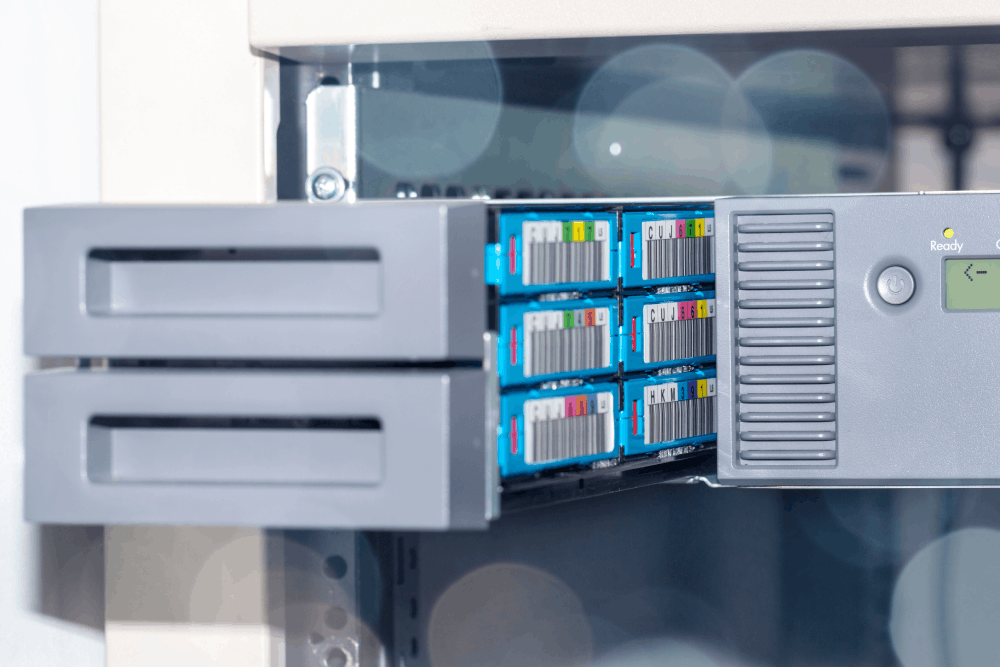
For many years, LTO tape migration benefited from relatively generous backward compatibility. Newer tape drives could read media written several generations earlier.
That has changed. LTO-8 and LTO-9 reduced the number of earlier generations they could read. LTO-10 reads only LTO-10 media. The practical implication is ominous: Owning the media does not guarantee continued access to the knowledge stored on it.
Older cartridges may eventually require drives, software, key managers, catalogs, or specialized technical knowledge that are increasingly difficult to maintain or replace.
With the right tools and knowledge, data can move from an older source directly to a modern target as long as a functioning environment still exists that can read and interpret the source.
So the real constraint is not simply media age or tape generation.
It is continued, functional access, and the knowledge to execute.
Readable Is Not the Same as Usable
Physical compatibility is only one part of the problem.
A tape may still be mechanically readable while the information on it is difficult—or impossible for the original environment—to interpret because the backup software, catalog, filesystem, or application that created it no longer exists, or because encryption keys are missing or mismanaged.
For any archive, three basic questions matter:
1 Can the media still be read?
2 Can the data structure or backup format still be interpreted?
3 Do we understand what the information represents and what value it may have?
These questions become increasingly important as organizations consolidate infrastructure accumulated across decades of technology changes, mergers, acquisitions, datacenter moves, and backup environments.
When you view archive modernization in this light, you stop looking at it as a data transfer and start seeing it as something different.
It should be a discovery event.
Migration Is an Opportunity to Uncover Hidden Value
Before moving data resting peacefully on hundreds—or thousands—of cartridges, organizations have an opportunity to determine what they actually have.
Some information may be duplicated. Some may no longer require retention. Some may be damaged or incomplete. Some may belong to systems that disappeared years ago or may be unreadable because of encryption.
And some may contain valuable historical knowledge the organization did not realize it still possessed.
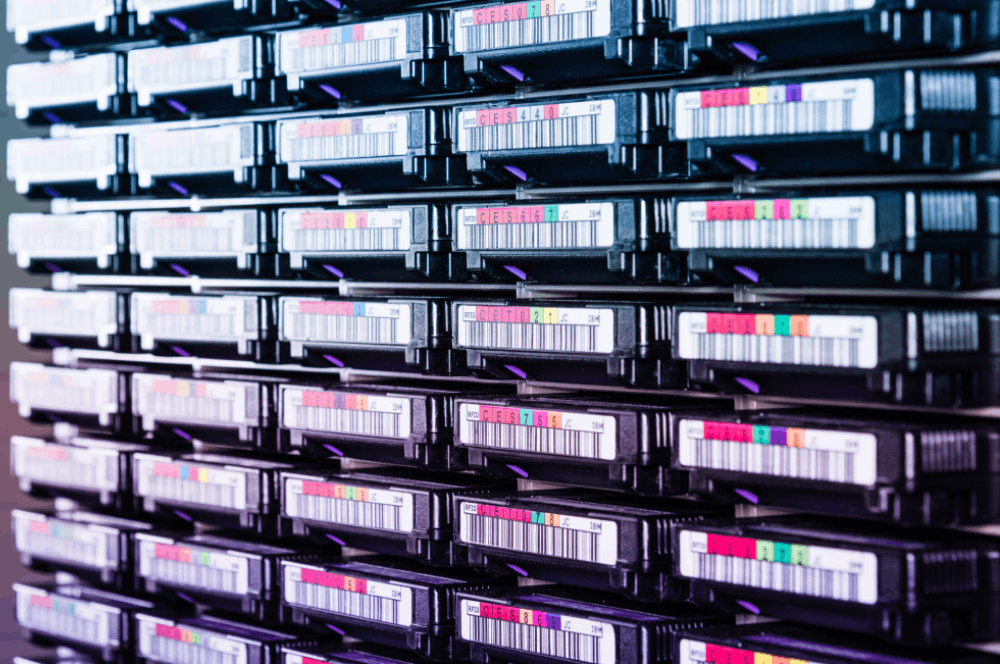
This is why a useful migration strategy should begin with discovery and inventory rather than simply counting tapes and selecting a new environment.
The objective is not to recover, retain, or move everything. It is to focus on what has value, based on business, regulatory, operational, and strategic priorities.
It’s data triage.
Through a triage and validation process, organizations can make informed decisions about what should be preserved, what can be defensibly retired, and what information should remain accessible for future use.
The most valuable outcome of migration may not be a modern archive. It may be knowing what you have—and making sure you can still use it.
Historical Knowledge Creates Proprietary Context
Modern analytics and AI are expanding the potential uses of proprietary historical information.
Years of customer relationships, product data, risk behavior, engineering decisions, service resolutions, research, transaction activity, and operational history can provide business context unavailable in public datasets.
Before historical enterprise knowledge can become AI-ready context, it first has to remain accessible, understandable, and governed.
That context may support analytics, intelligent search, investigations, regulatory requirements, research, retrieval-augmented generation, AI agents, and other applications that may not yet exist.
Public AI models can understand general concepts. But they do not inherently possess the history and context of a specific enterprise.
These data value strategies will be the focus of a future blog in this series.
For now, the point is simpler: organizations should think carefully before allowing an infrastructure retirement decision to permanently limit access to unique information that may have future value.
Preserve the Knowledge, Not Just the Media
Every storage technology eventually reaches the end of its useful life. The knowledge stored within it may not.
Archive modernization can be more nuanced and elegant than moving information from one generation of storage to another because of cost, security, or technology concerns. It is an opportunity to reduce technology dependency, understand the data estate, preserve and extract data value, and maintain future options for your historical information.
DriveSavers helps organizations globally develop comprehensive plans for archive migration and modernization using highly customized solutions designed around the unique requirements of each environment.
This article introduces a DriveSavers executive series examining Historical Enterprise Knowledge: how organizations can discover it, govern it, modernize it, and prepare selected information for analytics and AI-ready access.
Next in this series:
Before You Migrate: Expect the Unexpected
What decades of enterprise data can hide.
To recover data from tapes or other storage units, contact DriveSavers Recovery Services at 44 (20) 3048 5486.

 English (United States)
  English (Australia)
  French (France)
  English (UK)
  French (Canada)
  English (Canada)
  Spanish (Mexico)
  German
  Dutch
Dutch  Italian
  Finnish
  Polish
  Norwegian
  Swedish
  Danish
  Spanish (Spain)
  Chinese
  Japanese
  German (Austria)