


When DriveSavers opened its doors, floppy disks were state-of-the-art, hard drives could barely store a photo by today’s standards, and magnetic tapes were the standard for enterprise backups. Fast-forward four decades, and we’ve worked with every storage device as it evolved.
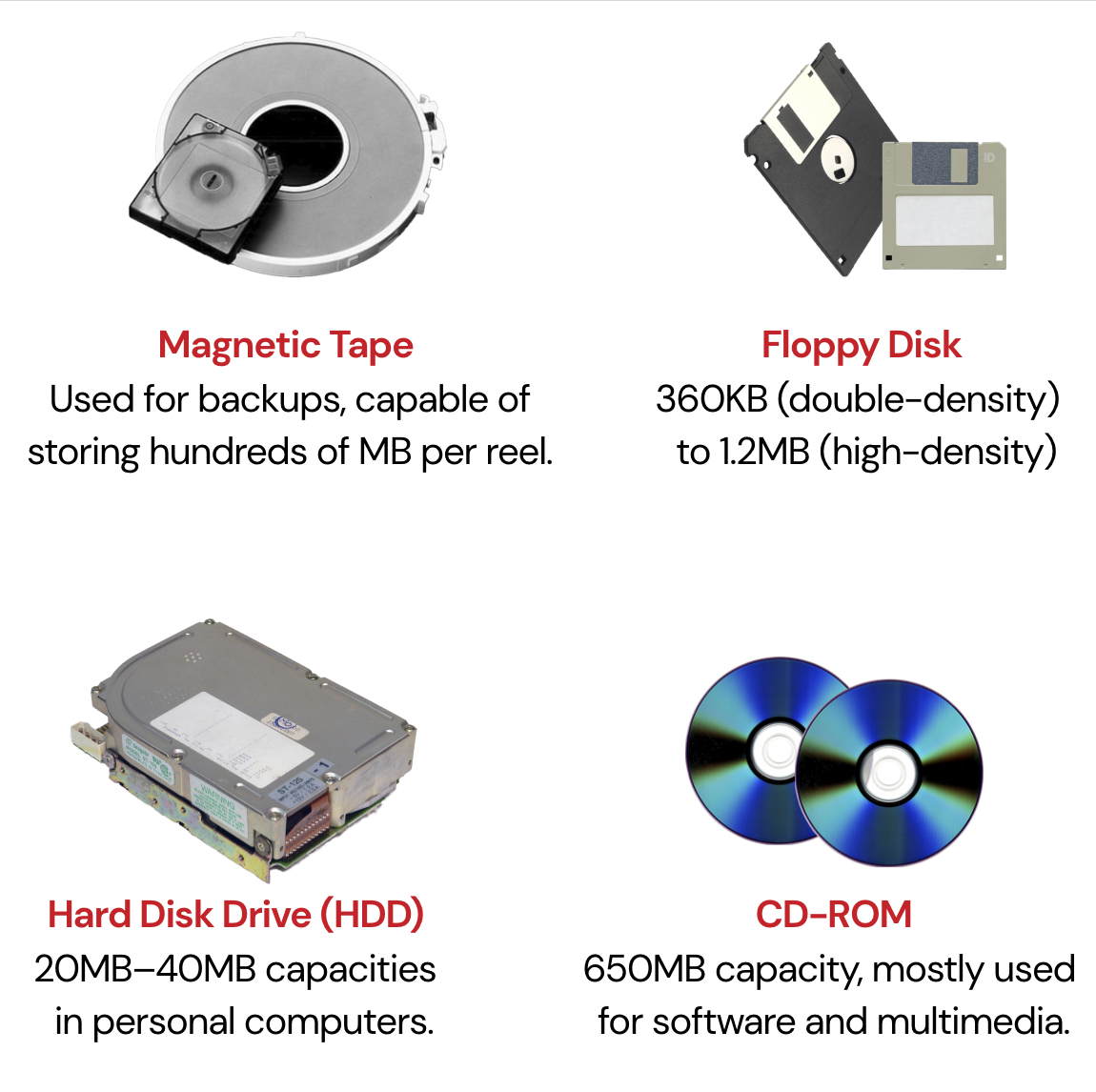
As DriveSavers opened it’s doors, in 1985, storing data was on magnetic tapes, floppy disk, hard drive, and CD-ROM.
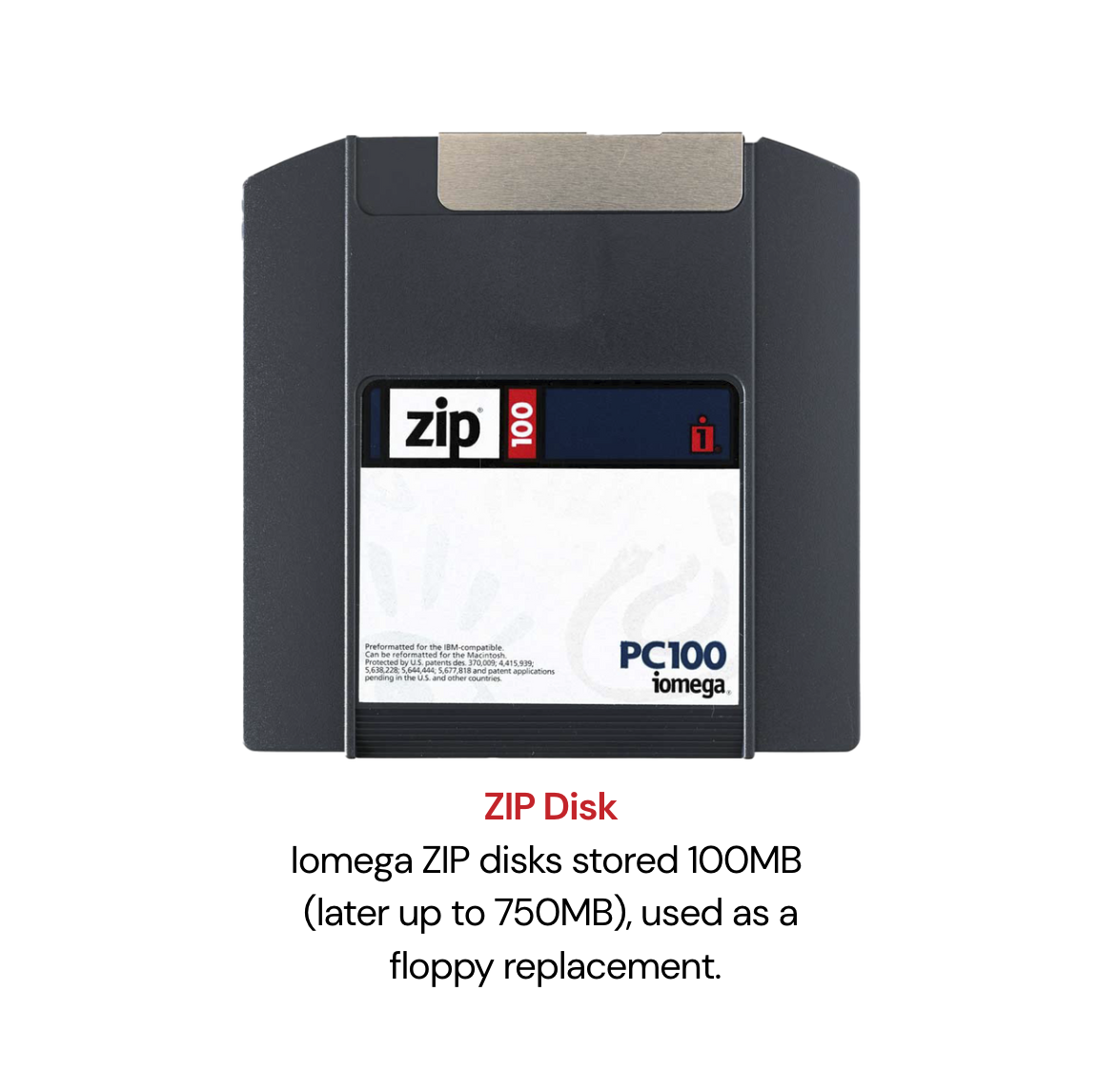
By the 1990s, storage media got a serious upgrade. Iomega’s ZIP disk became a favorite among creatives, offering a sleek, high-capacity alternative to the floppy.

In 1999, the SD card entered the market, giving camera and mobile phone users a compact way to store photos and music.
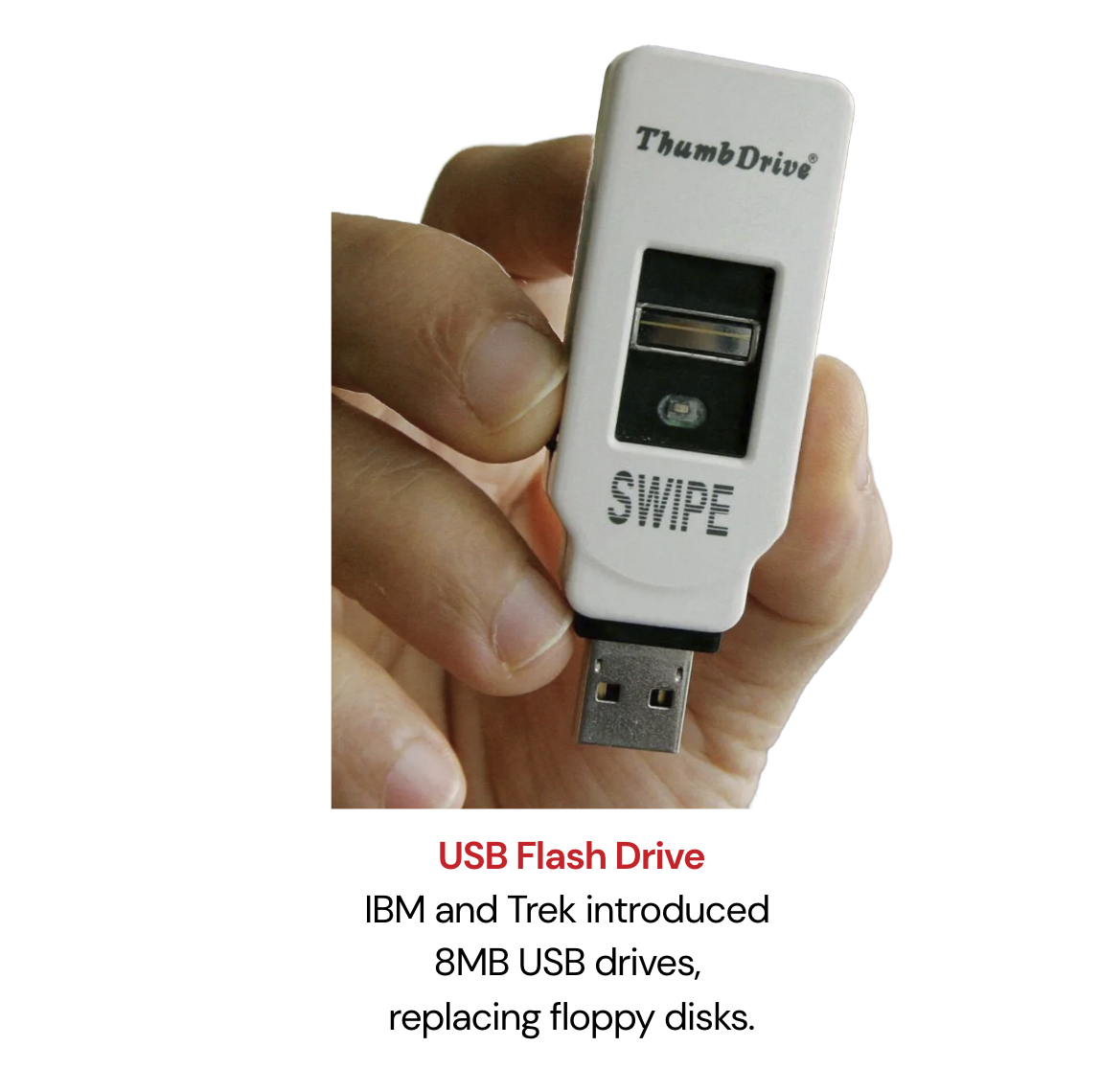
Game-changer, year 2000: the USB flash drive. Compact, durable, and plug-and-play, it redefined portable storage for a new generation.
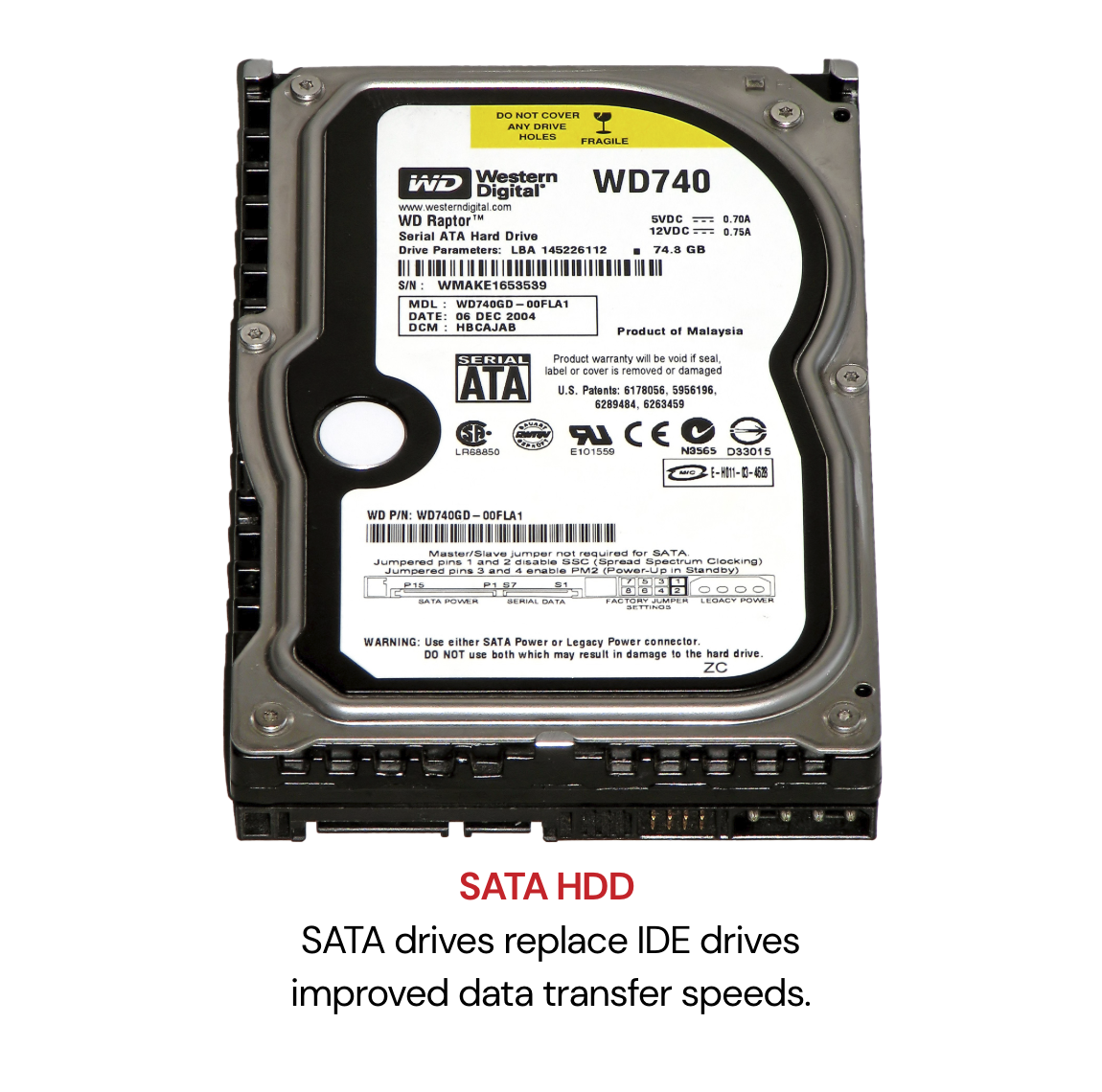
2023, SATA hard drives began replacing the older IDE format, delivering faster data transfer speeds and becoming the new standard.
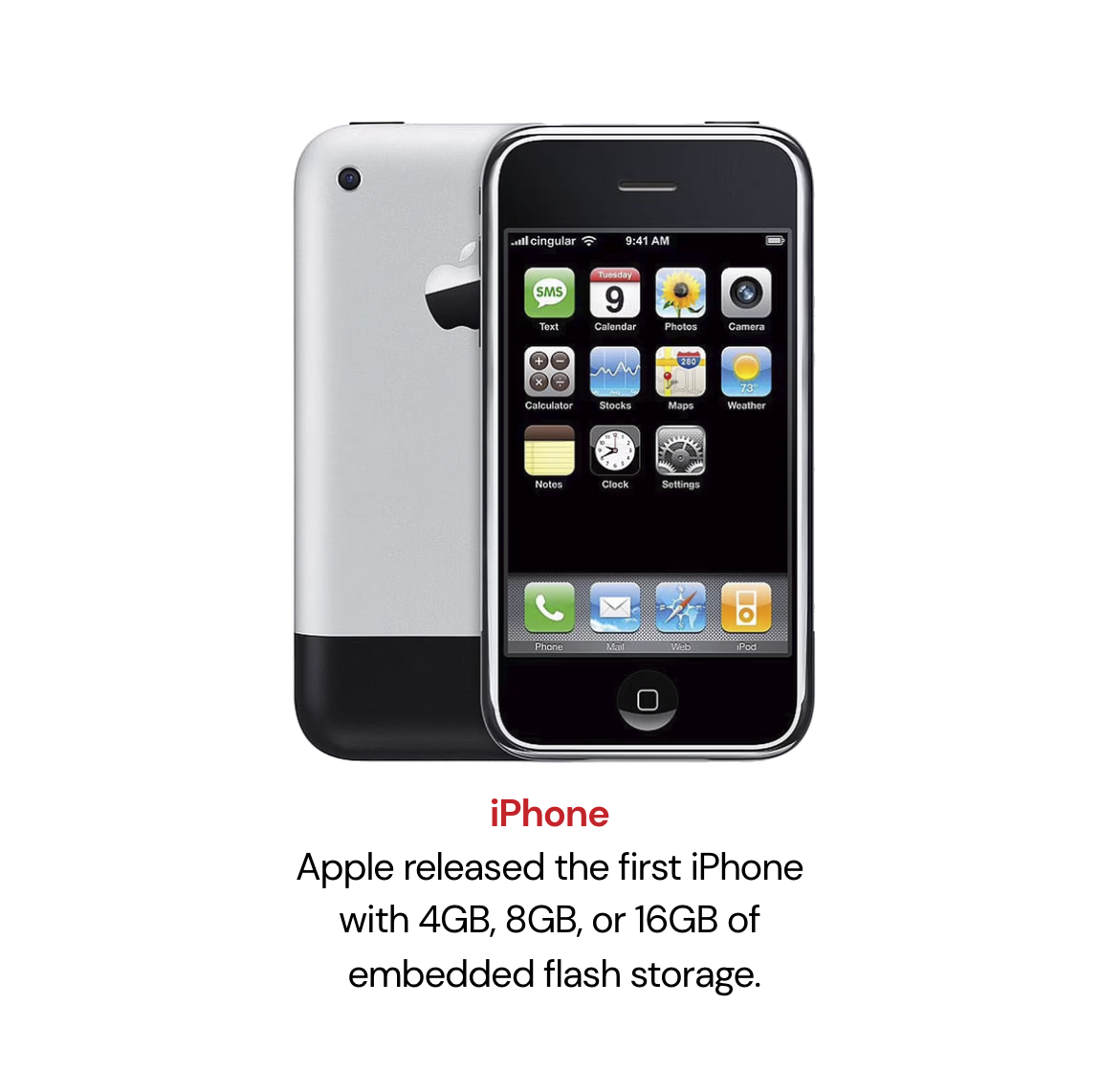
In 2007, the first iPhone redefined everything—putting flash memory in our pockets and changing how we store and access our digital lives.
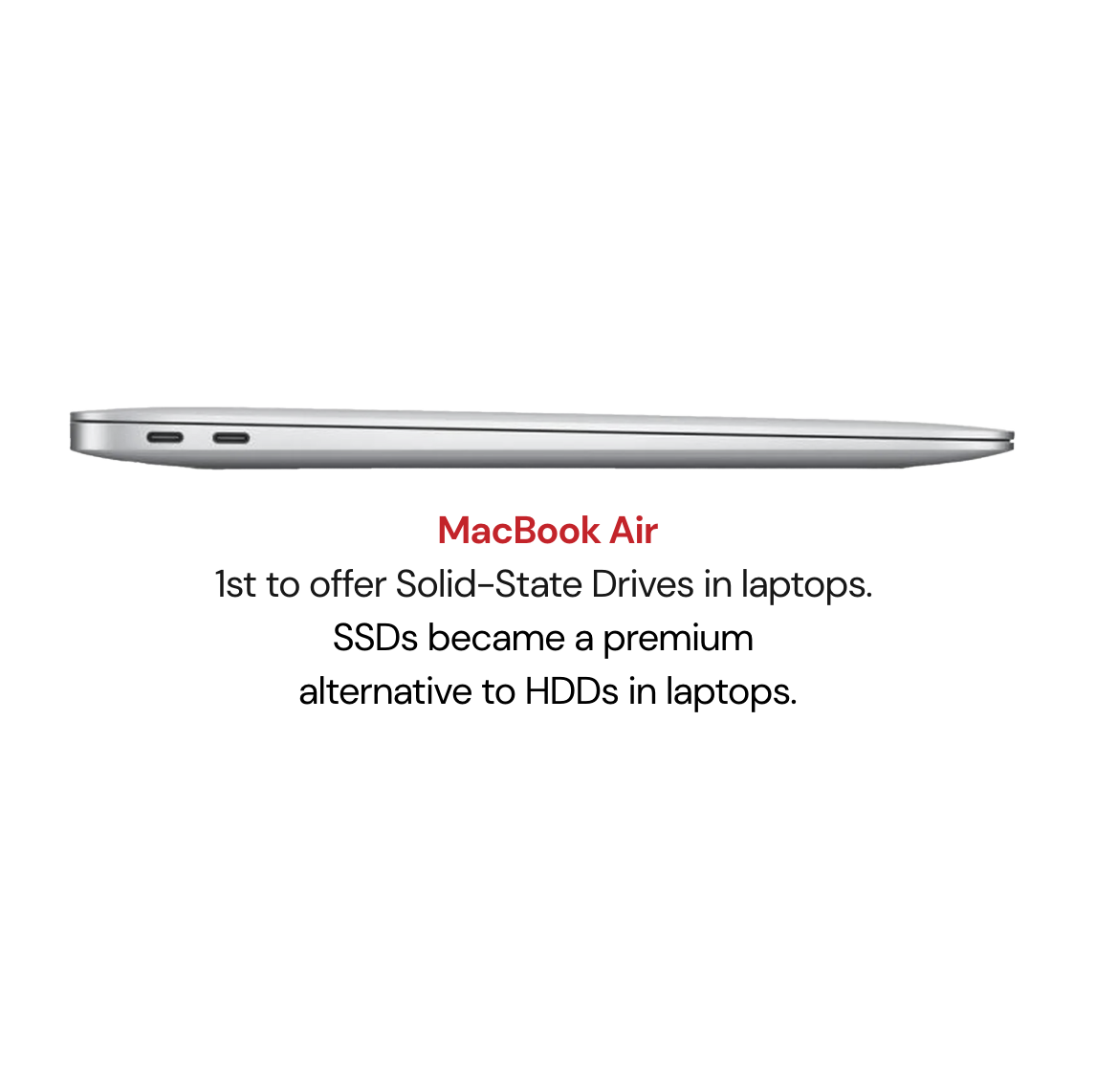
Apple set an another new standard in 2008 with the MacBook Air—the first laptop to feature a solid-state drive. Faster, lighter, and more reliable, SSDs quickly reshaped the future of data storage.
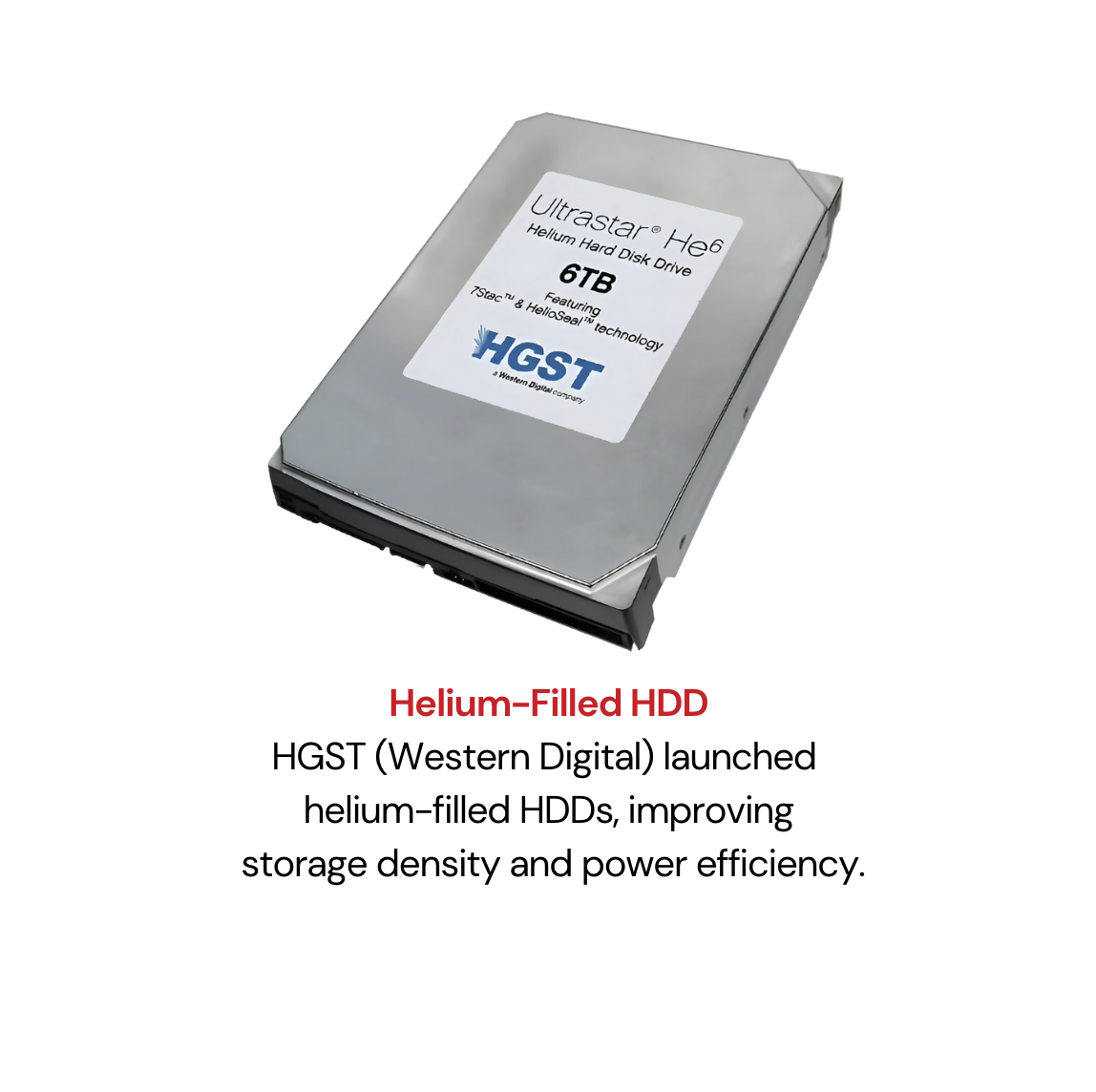
By 2013, manufacturer HGST took things even further with helium-filled hard drives. These drives ran cooler and stored more data, supporting cloud storage providers and enterprise environments with their massive storage demand.
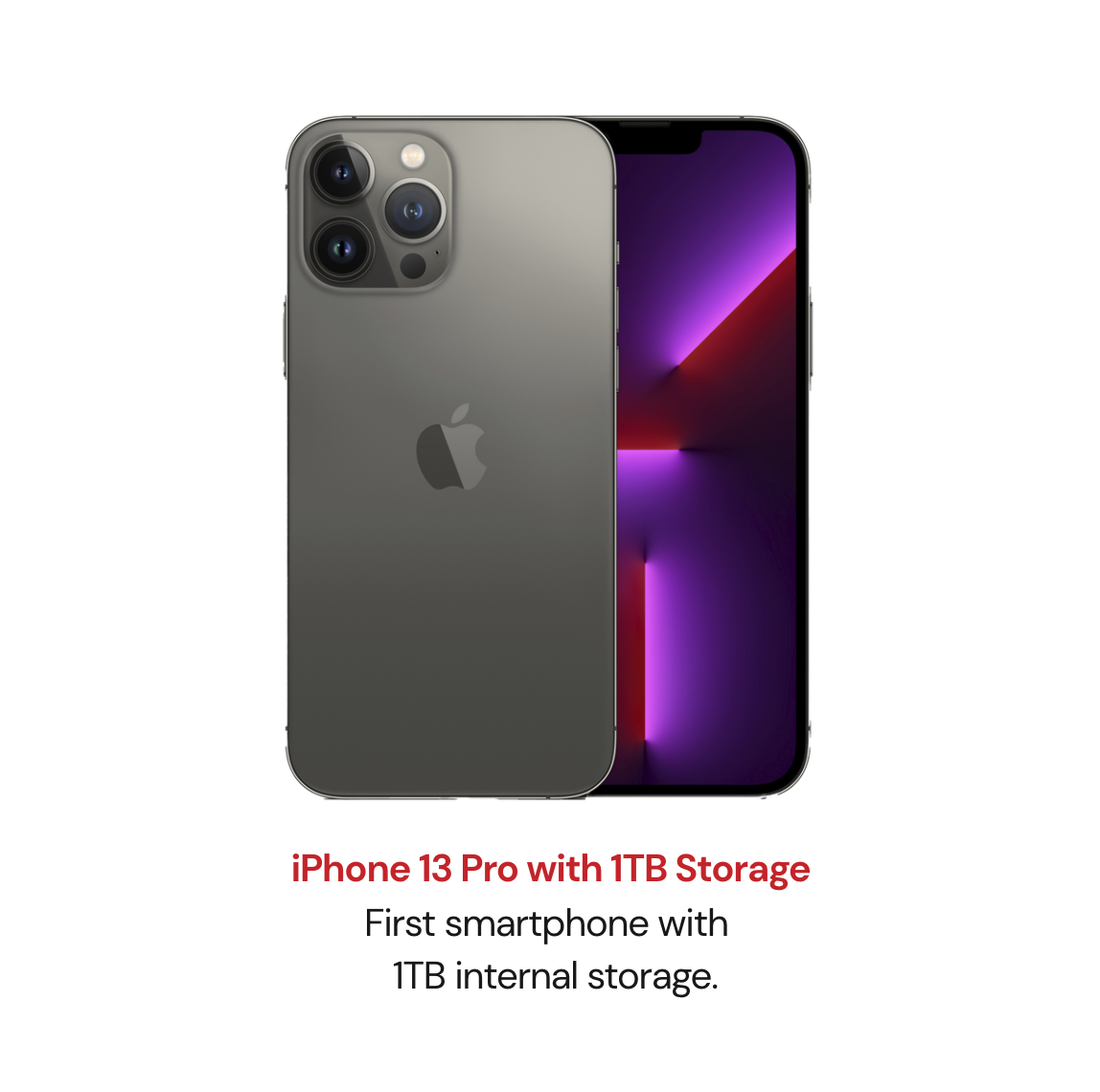
The iPhone 13 Pro debuted In 2021, with 1TB of internal storage—a milestone for smartphones that puts entire desktop computers from a decade ago to shame.
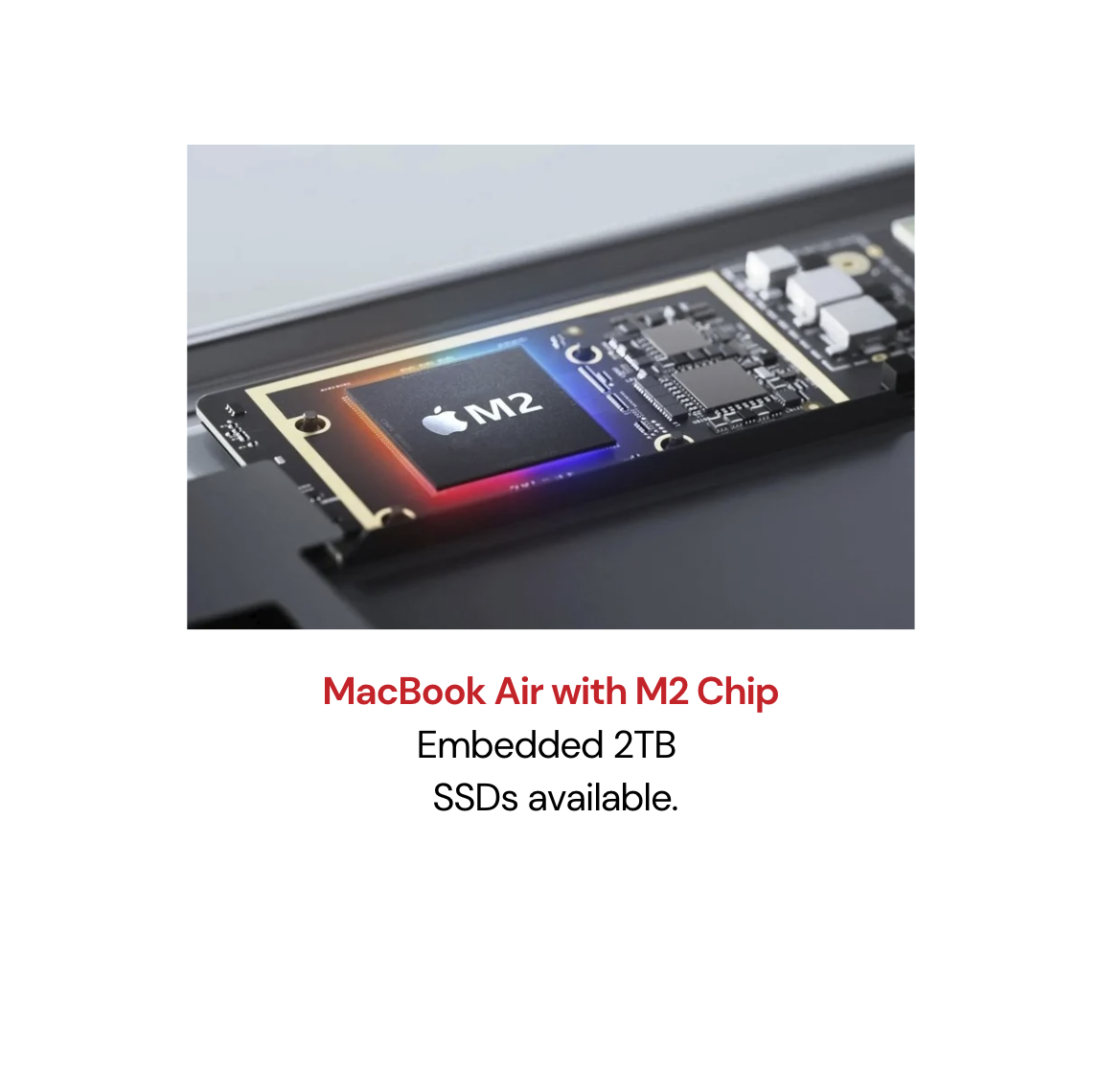
Apple’s M2 chip in 2022, embedded in the MacBook Air alongside SSDs up to 2TB.
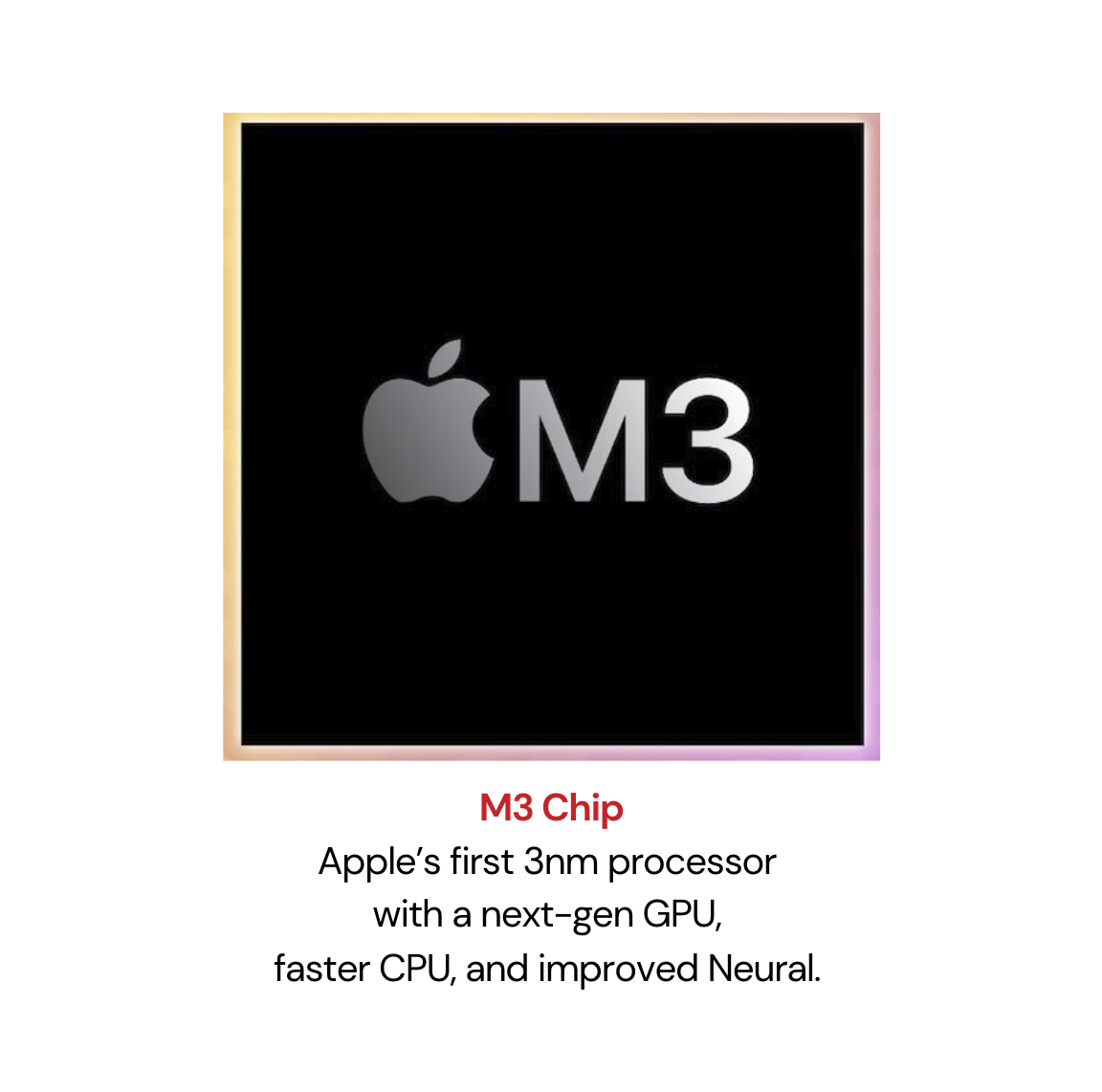
By 2023, the new M3 chip brought even greater speed and efficiency, offering a next-generation GPU and advanced neural processing capabilities.
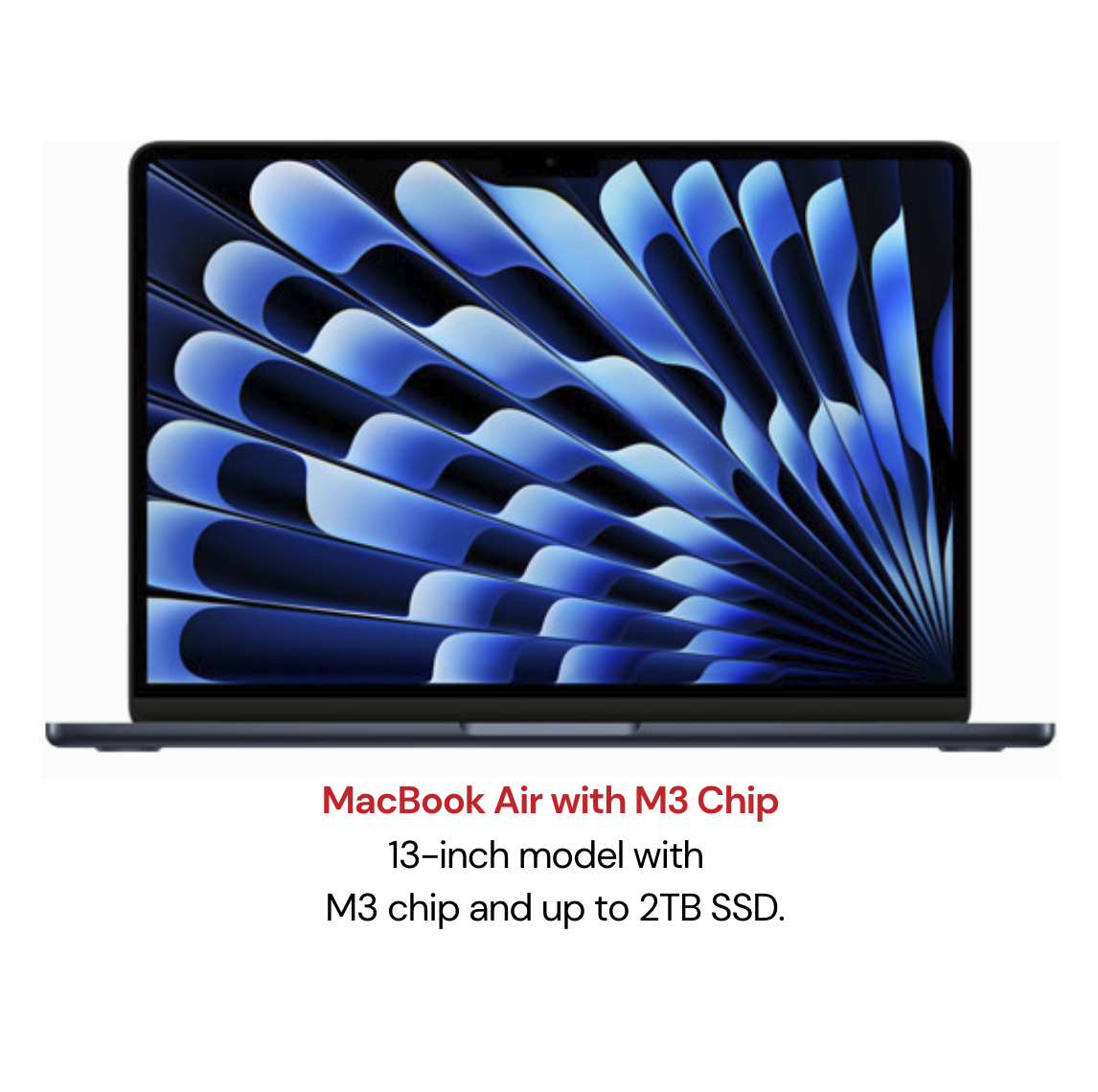
The 2024 MacBook Air with M3 chip is proof of just how far we’ve come—blending powerful performance with incredible storage in a machine that weighs less than a textbook.
 English (United States)
  English (Australia)
  French (France)
  English (UK)
  French (Canada)
  English (Canada)
  Spanish
  Japanese